WHAT IS ELECTRODEIONIZATION (EDI)
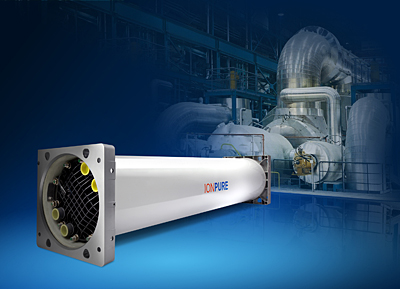
Electrodeionization (EDI) is a chemical-free, self-regenerating technology used to provide a consistent flow of high-quality demineralized water.
In short, EDI is a water treatment process that uses a combination of ion-exchange resins, ion-exchange membranes, and direct current to continuously deionize water without the need for chemicals. The avoidance of chemicals helps to reduce the systems’ operating and maintenance costs and, therefore, improve your bottom line.
With the growing costs of chemicals for regeneration and waste neutralization, and heightened safety concerns with handling hazardous chemicals, many industrial customers began seeking an alternative to cost-prohibitive, on-site regenerable ion exchange for creating ultrapure water.
Nam Solutions and Technologies Co., Ltd., offers EDI solution.

THE DIFFERENCE BETWEEN EDI AND MIXED-BED DEMINERALIZATION
While both ion exchange and EDI use ion-exchange resins, the removal mechanisms are quite different. Conventional ion exchange utilizes chemically regenerated ion-exchange resins, which function in a capture (exhaustion cycle) and discharge (regeneration cycle) mode. This results in a breakthrough of ions at the end of the service cycle and a rinse out of regenerant at the beginning of the next service cycle. Capacity and selectivity are the most important resin properties in the mode of operation.
EDI uses a reaction/transport mechanism to remove ions through resin under influence of a DC field. This requires a continuous path of like-charge resin beads. The transport is largely across the surface of the resin beads. Transport through resin bead (particle diffusion) can be limiting.
Some of the major advantages of EDI over traditional mixed-bed demineralization systems include:
- No acid or caustic bulk storage, pumping, waste neutralization, or disposal issues

EDI IN POWER GENERATION INDUSTRY
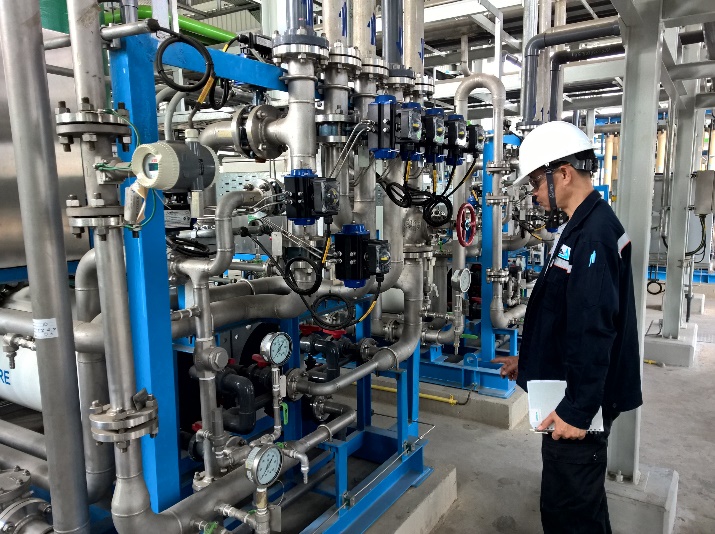
Power plants worldwide are switching out their conventional MBDI for EDI modules to feed boilers for steam generation. Designed similarly to reverse osmosis (RO) systems, they’re used in conjunction with RO as a polishing step for boiler feed water and cooling tower applications. For boilers, the modules provide demineralized water to create the steam that turns the turbines.


Electrodeionization (EDI) IN POWER GENERATION INDUSTRY
EDI IN MICROELECTRONICS INDUSTRY
Manufacturers of semiconductor devices need the highest in high purity water quality, requiring extremely low levels of contaminants such as sodium, silica, and boron. The microelectronics manufacturing industry also demands low maintenance technology that will operate efficiently with minimal downtime. Safety is also an industry concern, which is why more and more manufacturers are looking for a system that will reduce their chemical usage. Our EDI modules are designed to deliver a continuous supply of uninterrupted ultra pure water with the added benefit of not using chemicals.

EDI IN PHARMACEUTICAL INDUSTRY
Most major multinational pharmaceutical companies use EDI technology. The majority of the top 10 pharmaceutical companies own and operate multiple hot water sanitizable EDI units. Nam Solutions and Technologies Co., Ltd. supplies and services EDI modules which allow instantaneous hot water sanitization without temperature ramping, continuous operation at up to 60° C (140° F) and 2 bar/30 psi feed pressure during sanitization. There’s no need to re-torque these modules after installation/startup. Food grade and EU certified modules are also available for pharmaceutical applications where hot water sanitization is not required.

EDI IN LOW-FLOW APPLICATIONS
low-flow modules are used in laboratories, hospitals and universities for a wide range of applications, including:
- Central water system for lab
- Tabletop high-purity water systems for laboratory use
- Feed to equipment such as autoclaves and clinical analyzers
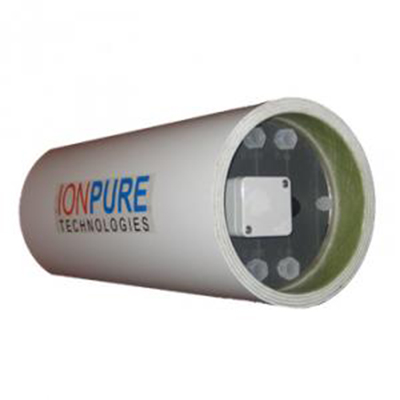
Nam Solutions and Technologies provide broad range of IONPURE EDI equipment and services to meet specific demands to our customers.